Evaluating Vintage Black and White Hand Mirror Vector Illustrations for Design Projects
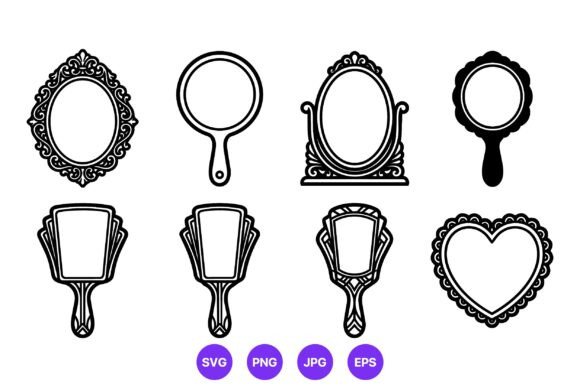
In the realm of digital design, the intersection of historical aesthetics and modern vector technology offers unique opportunities for creators. Vintage Black and White Hand Mirrors represent a specific niche of graphic assets that combine ornate, antique styling with the flexibility of scalable vector graphics. This collection typically features high-contrast, flat line art depicting various mirror styles, including intricate frames and distinct shapes such as heart-shaped mirrors. For designers, historians, and hobbyists, understanding the utility, limitations, and best applications of these assets is crucial for making informed decisions about their inclusion in creative workflows.
Understanding the Asset Composition
When evaluating a collection of black and white vector hand mirror illustrations, it is essential to first understand what constitutes the product. These are not photographs or raster-based images but rather mathematical representations of lines and shapes. The "vintage" aspect refers to the stylistic inspiration drawn from Victorian, Edwardian, or Art Nouveau periods, characterized by elaborate scrollwork, floral motifs, and symmetrical designs. The "black and white" descriptor indicates a high-contrast aesthetic, often resembling ink drawings or woodcut prints, which simplifies the visual language while retaining decorative complexity.
The technical delivery of these assets usually involves a ZIP folder containing multiple file formats: SVG (Scalable Vector Graphics), EPS (Encapsulated PostScript), PNG (Portable Network Graphics), and JPG (Joint Photographic Experts Group). The inclusion of both vector formats (SVG, EPS) and raster formats (PNG, JPG) ensures compatibility across a wide range of software, from professional tools like Adobe Illustrator to web-based platforms and basic image viewers. The claim of "100% vector" implies that the core artwork can be scaled infinitely without loss of quality, a critical feature for large-format printing or high-resolution displays.
Reasons for Interest and Practical Applications
Designers and content creators may seek out Vintage Black and White Hand Mirrors for several practical reasons. Primarily, these assets serve as versatile decorative elements that can enhance branding, packaging, and editorial layouts. The ornate nature of vintage frames adds a sense of elegance, nostalgia, or sophistication to a design without requiring the designer to create complex illustrations from scratch.
- Branding and Identity: Businesses in the beauty, wellness, or antique sectors often use mirror imagery to symbolize self-reflection, beauty, or history. A heart-shaped mirror with a decorative frame can soften a brand’s image, making it appear more approachable and romantic.
- Print-on-Demand Products: The high-contrast, black-and-white style is particularly well-suited for screen printing, laser engraving, and vinyl cutting. These manufacturing processes benefit from clean lines and solid fills, which vector files provide inherently.
- Digital Scrapbooking and Crafting: Hobbyists using digital cutting machines (such as Cricut or Silhouette) require SVG files to cut precise shapes from paper, vinyl, or fabric. The flat line art style ensures that the cutting paths are clear and manageable.
- Web and UI Design: PNG versions of these illustrations can be used as icons or decorative dividers on websites, adding a touch of classic charm to modern interfaces.
Benefits and Tradeoffs of Vector Line Art
Choosing vector illustrations over other types of imagery involves weighing specific benefits against potential tradeoffs. One significant advantage is scalability. Unlike raster images, which pixelate when enlarged, vector files maintain crisp edges at any size. This makes them ideal for projects that require versatility, such as a logo that must appear on both a business card and a billboard.
Another benefit is editability. With SVG and EPS files, users can modify individual components of the illustration. For instance, a designer might choose to remove certain decorative elements from an ornate frame to simplify the design or change the line weight to better suit a minimalist aesthetic. This level of control is not possible with static JPG or PNG files.
However, there are tradeoffs. The "flat line art" style, while clean and modern, lacks depth, shading, and texture. If a project requires a realistic, three-dimensional appearance or a painterly effect, these vector illustrations may feel too stark or simplistic. Additionally, working with vector files requires a certain level of technical proficiency. Users must be familiar with vector editing software to fully leverage the capabilities of SVG and EPS formats. Those unfamiliar with bezier curves and path manipulation may find the learning curve steep compared to simply dragging and dropping a JPG.
Considerations for Selection and Use
When selecting a collection of Vintage Black and White Hand Mirrors, buyers should consider the specific style of ornamentation. "Vintage" is a broad term; some illustrations may lean towards Gothic intricacy, while others may reflect the lighter, more playful curves of Rococo. Reviewing the preview images carefully ensures that the aesthetic aligns with the project’s tone. For example, a heart-shaped mirror with delicate filigree may suit a wedding invitation, whereas a heavier, more geometric frame might be better suited for a masculine grooming brand.
File compatibility is another critical consideration. While SVG is widely supported in web browsers and modern design tools, EPS remains the standard for many professional printing houses. Ensuring that the download includes both formats provides a safety net for various production needs. Furthermore, checking the resolution of the included PNG and JPG files is important if the user intends to use the raster versions directly. High-resolution raster backups are useful for quick previews or for users who do not have vector editing software.
Situations Where This Asset Is a Strong Fit
This type of asset is particularly effective in scenarios where clarity and stylistic consistency are paramount. For instance, in instructional materials or diagrams, a simple line drawing of a hand mirror can convey the object’s form without distracting details. In branding, companies aiming for a "timeless" or "artisanal" image can use these illustrations to evoke a sense of heritage and craftsmanship.
Additionally, these vectors are strong candidates for sublimation printing on light-colored fabrics. The high-contrast black lines transfer cleanly onto white or pastel materials, creating sharp, durable designs. Crafters creating vinyl decals for home decor will also find these files highly suitable, as the closed paths in vector files facilitate easy weeding and application.
When to Consider Alternatives
Despite their versatility, there are situations where alternative assets may be more appropriate. If a project demands photorealism, such as a high-end cosmetic advertisement featuring actual glass reflections and skin textures, a vector line drawing will likely fall short. In such cases, high-resolution photography or 3D renders would be more effective.
Similarly, if the target audience prefers bold, colorful, or contemporary pop-art styles, the monochromatic, ornate nature of vintage mirrors may feel outdated or mismatched. Designers working in vibrant, modern contexts might consider looking for stylized, colorful illustrations or abstract geometric shapes instead. Furthermore, if the user lacks access to vector editing software and only needs a quick, uneditable image for a social media post, purchasing a full vector package may be unnecessary overhead; a simple stock photo or pre-made PNG might suffice.
Making an Informed Decision
Ultimately, the decision to incorporate Vintage Black and White Hand Mirrors into a project depends on the specific goals of the design and the technical capabilities of the user. These assets offer a blend of historical charm and modern flexibility, making them valuable tools for designers who value precision and scalability. By carefully evaluating the style, file formats, and intended application, creators can determine whether these vector illustrations align with their vision. For those seeking to add a touch of elegant nostalgia to their work without sacrificing technical quality, this collection represents a pragmatic and aesthetically pleasing choice.